Vision
Space Environment Technologies’ vision is to enable human evolution into space.
Mission
To make our vision a reality, we are improving the quality of life on Earth by reducing adverse effects of space weather on humans, our planet, and our technology. With support from our partners, we’ve built an ecosystem of complementary products and services that combines leading-edge space physics models, unique operational data feeds, innovative instruments, and observing platforms found nowhere else in the world.
What is SpaceWx?
“Wx” is a standard abbreviation for the word “weather.” Thus, “SpaceWx” means “Space Weather.”
Our History
From the foundations of modern space weather research to aviation, the International Space Station, and the Moon.
Roots in the Upper Atmosphere
W. Kent Tobiska studies solar and atmospheric physics at the University of Colorado Boulder under Charles Barth, founding director of the university’s Laboratory for Atmospheric and Space Physics, and works on the Solar Mesosphere Explorer—the first satellite ever built and operated entirely by a university.
Foundations at NOAA
Tobiska and colleague Dave Bouwer work at NOAA’s Space Environment Laboratory under Dick Donnelly, developing solar activity indices—including the GOES X-ray Background Index and the NOAA Mg II Core-to-Wing Ratio—that remain part of the operational infrastructure of space weather forecasting today.
Space Environment Technologies Is Founded
SET is co-founded by Kent and Susan Tobiska and signs a Cooperative Research and Development Agreement with NOAA’s Space Environment Laboratory to produce operational solar irradiances, establishing it as a founding company in commercial space weather. SET has also been an active member of the ISO U.S. Technical Advisory Group for Space Systems since its inception.
Space Weather and Research Associates Divisions Formed
SET creates divisions for independent researchers affiliated with the company, beginning with Dr. Wayne Pryor.
Planetary and Space Sciences Division Formed
SET acquires Space Infrastructure, Inc. and merges it into its Infrastructure and Standards Division. SET continues as an Executive Board member of the derivative Space Infrastructure Foundation. A research group from the University of Southern California, led by Prof. Donald Shemansky, joins SET to form its Planetary and Space Sciences Division.
Weathering the Great Recession
Barbara Tobiska, Kent’s mother, personally loans funds to cover SET’s payroll through the Great Recession, keeping its small team working. During this period, SET research scientist Bruce Bowman completes the JB2008 atmospheric density model, earning him the Rotary National Award for Space Achievement.
SET Joins the Executive Committee of ACSWA
Along with other member companies, SET promotes space weather mitigation as a matter of critical national infrastructure, economic strength, and security through the formation of the American Commercial Space Weather Association.
JB2008 Becomes Internationally Recognized
Bruce Bowman leaves U.S. Air Force Space Command to join SET as a Senior Research Scientist, continuing to refine and maintain JB2008. The model is adopted as the operational basis for tracking the low-Earth-orbit satellite catalog, as part of the COSPAR International Reference Atmosphere, and as an ISO standard.
SET Joins CU Boulder’s Space Weather Center
SET joins the University of Colorado Boulder’s Space Weather Technology, Research and Education Center, a catalyst for space weather research and technology development organizations across the Colorado Front Range.
HASDM Database Agreement and the PROSWIFT Act
SET and West Virginia University sign a HASDM Database Use Agreement to further upper-atmosphere research, while SET contributes its expertise to the American Institute of Aeronautics and Astronautics Standards Committee. Congress also passes the PROSWIFT Act, long advocated by SET and ACSWA, establishing a White House-led interagency group to coordinate national space weather strategy.
International MOU with the Republic of Korea
SET signs an agreement with the Republic of Korea Space Weather Center to share information related to the radiation environment at aircraft altitudes and its relationship to human tissue exposure.
World View Partnership and the International Space Station
SET signs an agreement with World View Enterprises to provide instrumentation for measuring radiation at stratospheric balloon altitudes. That same year, an ARMAS instrument launches to the International Space Station aboard a Northrop Grumman Antares rocket.
A Seat at the National Table
Dr. Tobiska is appointed to the White House Space Weather Advisory Group, the ARGOS stratospheric platform is announced, and SET authors the Anemomilos Plan, an internal strategic paper describing space weather forecasting as a necessary foundation for the future space economy.
Historic Firsts in Radiation Monitoring
SET completes a 28-day continuous stratospheric balloon flight with World View, demonstrating continuous, 24/7 aviation atmospheric radiation monitoring. During the Gannon superstorm, an ARMAS instrument aboard a commercial aircraft records radiation dose measurements during an extreme space weather event at aviation altitude. Dr. Tobiska is reappointed to the Space Weather Advisory Group.
ARMAS Reaches the Moon
An ARMAS instrument lands near the Moon’s south pole aboard Intuitive Machines’ Athena lander, launched by SpaceX. The mission extends SET’s work from aircraft and balloons to suborbital flights, the International Space Station, and the lunar surface. SET also completes its internal roadmap, Enabling Human Evolution Into Space.
Expanding Access and Global Partnerships
SET releases an expanded, publicly available version of the HASDM density database, launches its public Space Weather Forecast Dashboard, and signs a U.S.–Greek memorandum of understanding with Envir to collaborate on environmental systems spanning near-Earth space, the atmosphere, and terrestrial and marine ecosystems.
Join Us
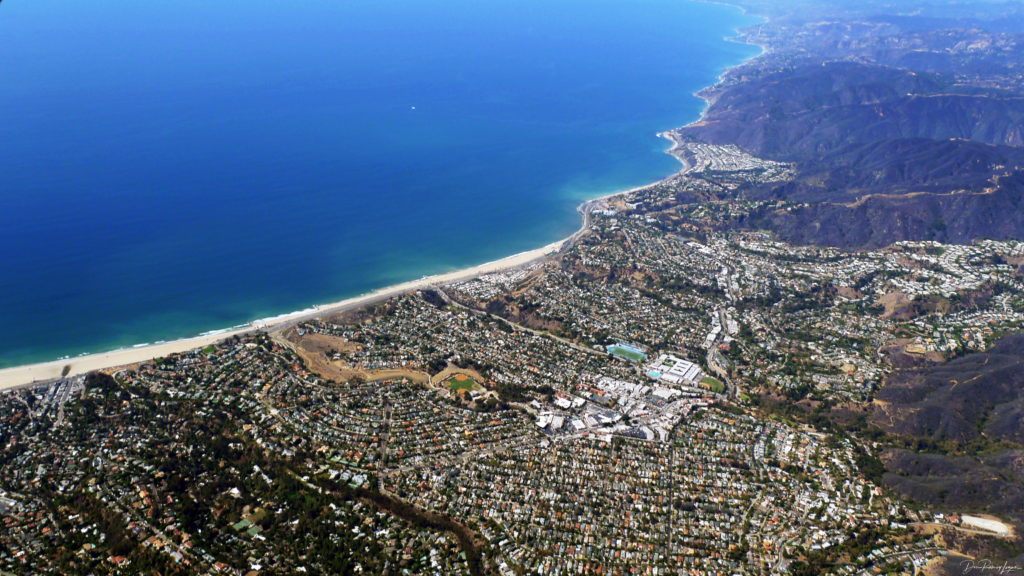
Headquartered in Pacific Palisades, California
SET provides remote work opportunities for team members across the United States.
If you’re interested in a career in commercial space weather research, aerospace, aeronautics, or technology, explore our current job postings. Undergraduate students and recent graduates can also learn more about our internship program.